
DPC Membrane Sheet Roll: Applications, Sizes, Advantages & Waterproofing Guid
dpc membrane sheet roll free delivery
Plaster starts flaking near the floor. A faint tide mark works its way up the brickwork, and no
amount of repainting makes it go away for long. Nine times out of ten, that’s not a leak coming
from above; it’s moisture climbing up from the ground. That’s the exact problem a dpc membrane sheet roll free delivery is built to solve.
DPC stands for Damp Proof Course. It’s a barrier built directly into a wall or foundation detail,
and its job is to stop rising damp before it ever reaches a visible surface. That’s a different
approach than surface waterproofing sheets, which goes on after the wall already exists. A DPC
roll waterproof gets built into the construction itself, so it interrupts moisture right at the source
instead of trying to keep it out after the fact.
Here’s what this guide walks through: what a DPC membrane sheet roll actually does, where it
goes in a building, what sizes are out there, and what installing one properly actually involves.
What Is a dpc membrane sheet roll free delivery?
Rising damp is capillary action, plain and simple the same thing that pulls water up through a paper towel. Brick and mortar are porous enough that they draw ground moisture upward on
their own, slowly, without any outside pressure pushing it.
A DPC roll breaks that path. It goes in as a horizontal layer, usually near the base of a wall, and
once moisture hits it, there’s nowhere left for that moisture to go. It stops right there instead of
working its way further up into plaster and finishes.
It helps to separate this from general surface waterproofing, because people mix the two up.
Coating a wall, or laying a membrane over a foundation slab, deals with water trying to push in
from outside. A DPC is doing something narrower and more specific: interrupting moisture
movement through the building element itself, at one defined point in the wall or foundation.
There’s a related term that’s worth knowing too Damp Proof Membrane, or DPM.
That usually means a wider sheet laid under floors or slabs, covering a broad area of ground rather than sitting as a narrow strip inside a wall. DPC and DPM often show up together on the same building, each one handling a different moisture path. They get used interchangeably in
conversation sometimes, but they’re not actually the same thing.
Application of dpc membrane sheet roll free delivery
Foundations are the most common place you’ll find a DPC roll. They’re in constant contact with
soil, so placing a DPC at the right level keeps ground moisture from working its way up into the
walls sitting above.
Masonry walls need the same protection at their base, especially at plinth level that’s the point
where a wall shifts from foundation up into the visible structure above ground. This is usually
where the DPC goes in during construction, built directly into the mortar line.
Ground-floor walls follow the same principle, just across more surface area. These are the
sections of wall closest to ground moisture, and they take the most consistent exposure over time.
Floors sometimes call for a related damp-proof membrane dpc membrane sheet roll free delivery system instead, but that product and detail has to be picked for the specific application it’s not something you just swap in for a standard DPC roll and assume it’ll behave the same way.
Where a DPC meets an adjoining
damp-proof membrane, that connection needs to be done properly, or you end up with a gap
right at the junction where the whole system breaks down.
Underground and foundation-adjacent details vary a lot depending on how the building’s
designed, and what’s suitable comes down to the material, the exposure conditions, and
whatever the manufacturer specifies for that particular system. Not every DPC product is rated
for every one of these situations, so that’s worth checking before assuming one size fits all.
Size of DPC Membrane Sheet Roll
Width comes down to one thing: it has to match the wall or foundation detail it’s going into. Not
the other way around.
DPC Membrane Width Typical Consideration
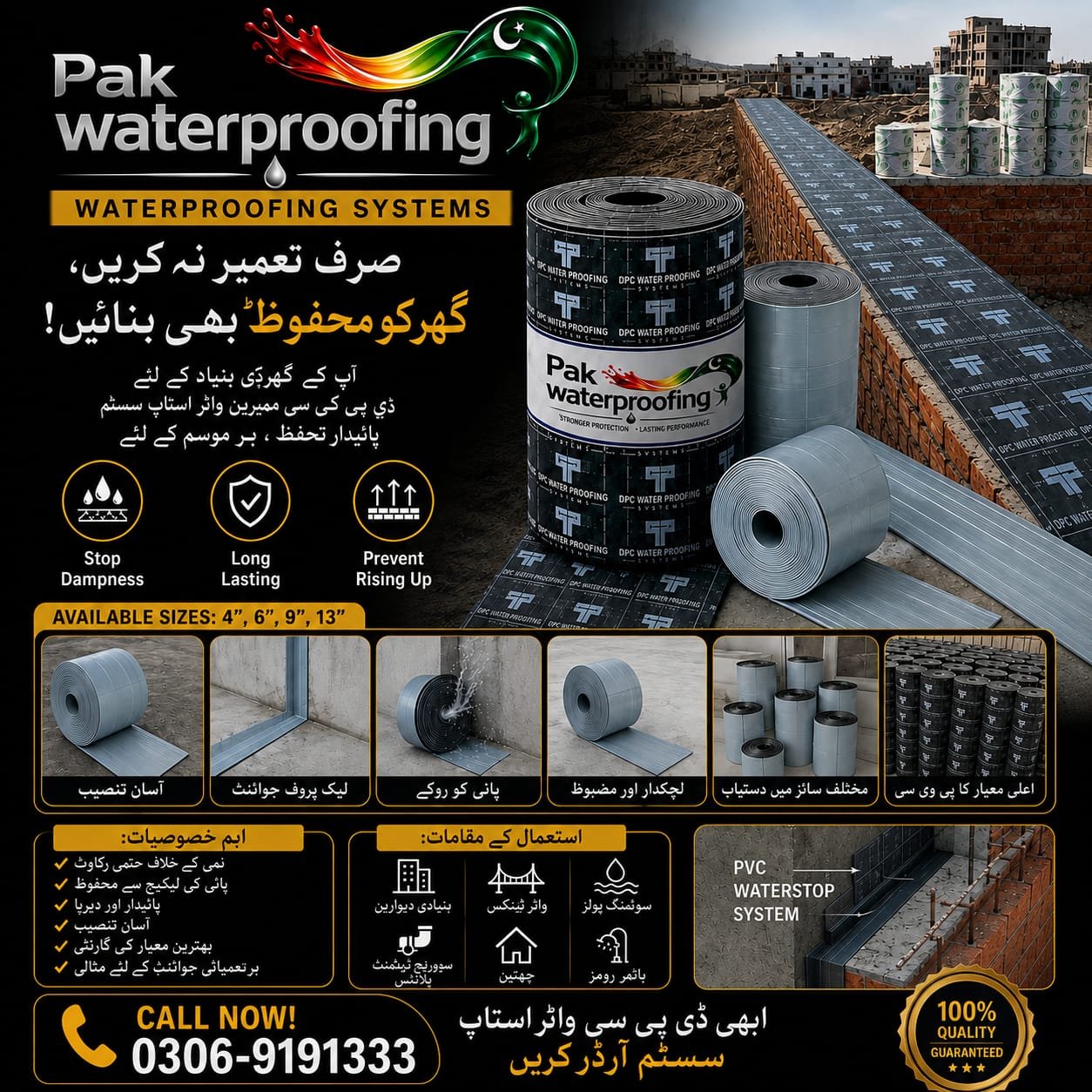
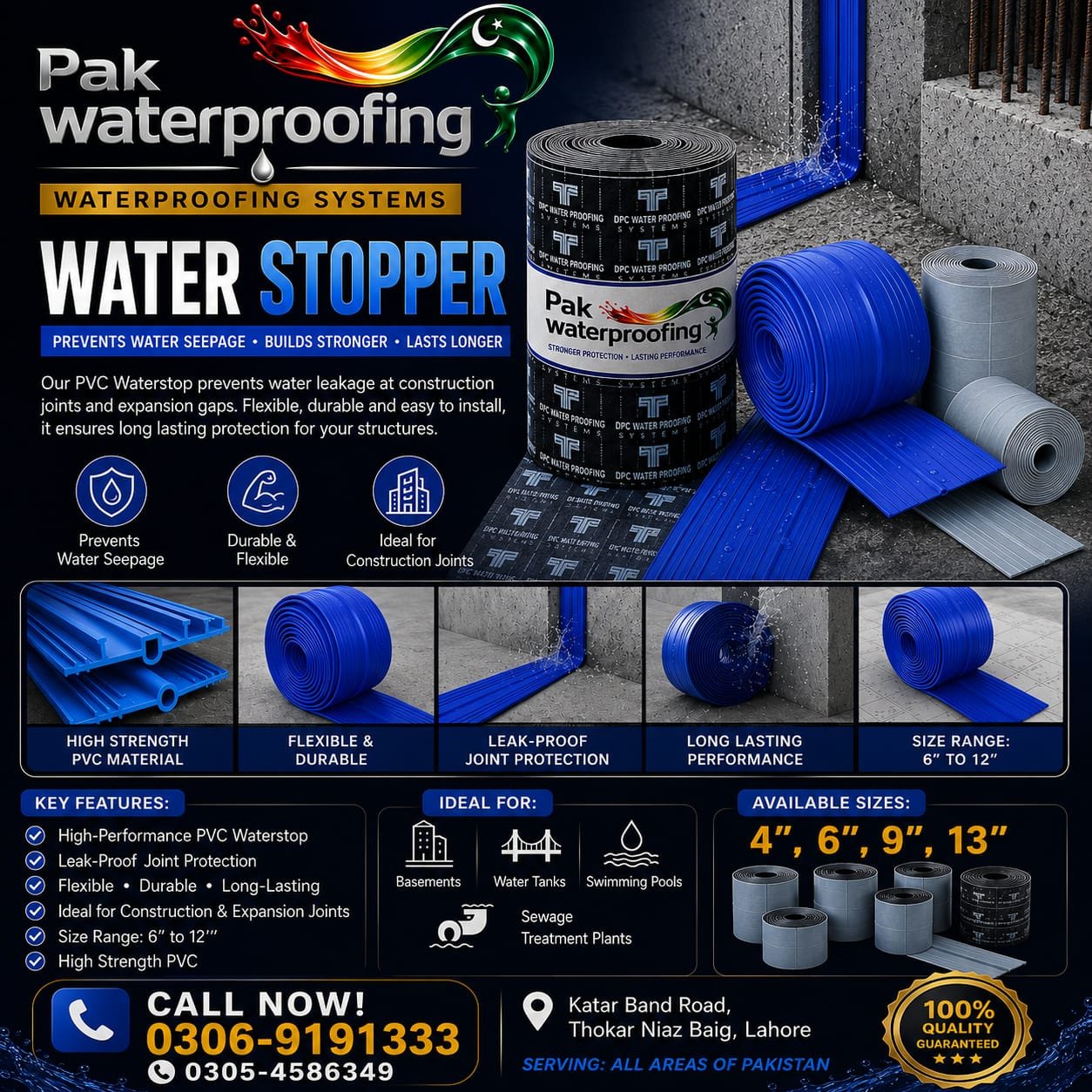
4 inch Suitable where the construction detail requires a narrower DPC
9 inch Suitable for wider wall or foundation details
12 inch Suitable for broader construction applications
13 inch Suitable for wider wall or foundation requirements
No single width beats the others across the board. A narrow wall needs a narrower roll. A
thicker wall, or a broader foundation detail, needs enough width to cover the full section with a
bit of margin for proper positioning not just the bare minimum.
Width also isn’t standardized the way people sometimes assume. Some manufacturers offer
4.5, 9, and 13 inch options; others work entirely in metric sizes. There’s no single fixed number across the industry, which is exactly why matching the roll to the actual wall thickness on site matters more than chasing a specific figure off a spec sheet.
Advantages of dpc membrane sheet roll free delivery
A DPC roll, installed properly, brings a few real advantages worth weighing before you settle on
a product:
● Deals with rising damp at the source, instead of patching up symptoms once they’ve
already shown up on the wall
● Forms a continuous barrier, provided the joints overlap properly and the corners get
proper attention
● Protects masonry from the kind of long-term ground moisture that quietly weakens brick
and mortar over years
● Cuts down on the usual damp symptoms flaking plaster, discoloration, that musty smell
near floor level
● Easier to handle on site than a fully liquid-applied system, since it arrives pre-formed as
a roll rather than something mixed and poured
● Comes in several widths, so it adapts to different wall thicknesses and construction
details
● Works naturally into new-build construction, where it goes in from the start rather than
getting retrofitted afterward
None of that adds up to permanent, guaranteed protection no matter what. How well it performs
depends on the right product, correct detailing, and an installation that actually matches the site
conditions skip any one of those and the rest doesn’t count for much.
Pak Waterproofing Services for DPC Membrane Sheet Roll
Picking the right DPC roll is only half the job. What actually determines whether it performs is
how it goes in.
At Pak Waterproofing, we start by looking at the construction detail itself — a DPC that’s wrong
for the wall type it’s going into isn’t going to do its job, no matter how good the product is on
paper. We check the receiving surface for damage or irregularities first, and get it properly
prepared before anything goes down.
From there, width gets chosen to match the wall or foundation section, not picked by default
because it’s what’s on hand. Positioning matters just as much a DPC set at the wrong level, or
laid unevenly, loses a good part of what it’s meant to do.
Continuity is where a lot of installs go wrong if they’re rushed. We keep proper overlap at every
joint and pay close attention to corners and junctions, since that’s usually where a
damp-proofing system fails first. Once the membrane’s down, we protect it from punctures or
damage before the next stage of construction covers it up, and we check the finished run before
it disappears under masonry or finishing work for good.
None of this guarantees a building will never see a damp issue again nothing does. What proper
installation does is give the DPC roll its best possible shot at performing the way it’s designed
to, for as long as the site conditions and construction detail allow.
FAQs About DPC Membrane Sheet Roll
What is a DPC membrane sheet roll?
It’s a Damp Proof Course a barrier built into a wall or foundation detail to stop rising damp
caused by capillary action. Instead of coating a surface, it sits inside the construction itself,
stopping moisture before it climbs any further up through brick and mortar.
What is the purpose of DPC waterproofing?
Its job is interrupting the upward movement of ground moisture through masonry. Left alone,
rising damp leads to flaking plaster, discoloration, and long-term wall damage near floor level. A
DPC roll gives that moisture nowhere left to go once it hits the barrier.
What sizes of DPC membrane sheet rolls are available?
Common widths run 4, 9, 12, and 13 inch, though the exact lineup depends on the
manufacturer. Which one’s right comes down to the wall thickness or foundation detail it’s going
into there’s no single fixed industry standard.
Where is a foundation DPC membrane sheet roll used?
Usually at the base of masonry walls, at plinth level, and in foundation details where rising
damp is a risk. It’s often paired with a damp-proof membrane at floor level, keeping the moisture
barrier continuous across the whole structure.
How can I get DPC membrane sheet roll services from Pak Waterproofing?
Send over the wall or foundation details construction stage, any damp issues already showing.
From there, we work out the right width and installation approach, covering everything from
surface prep through to final joint continuity.
Reviews
There are no reviews yet.